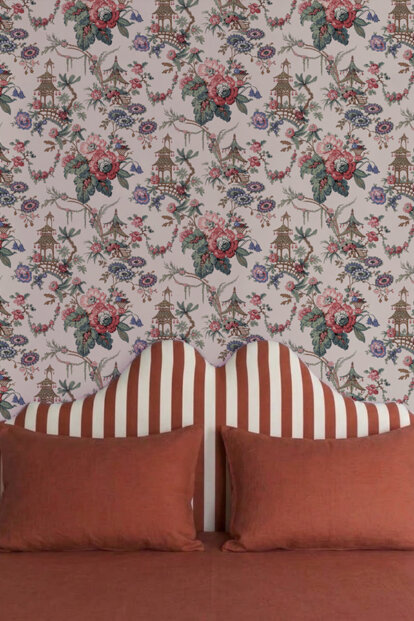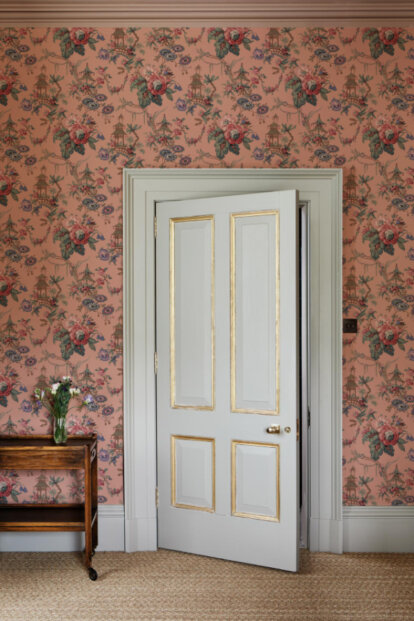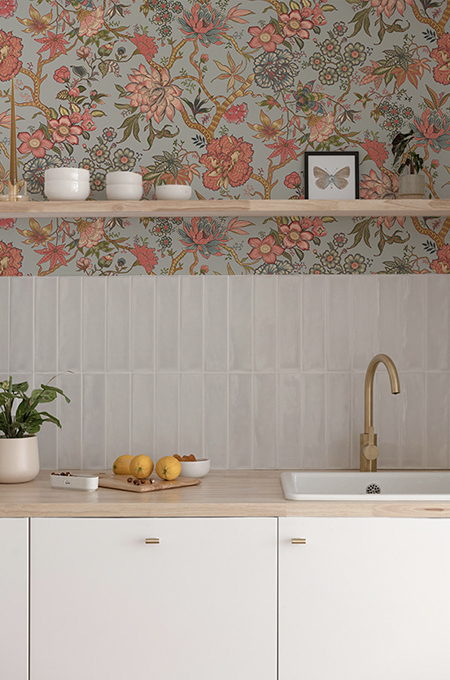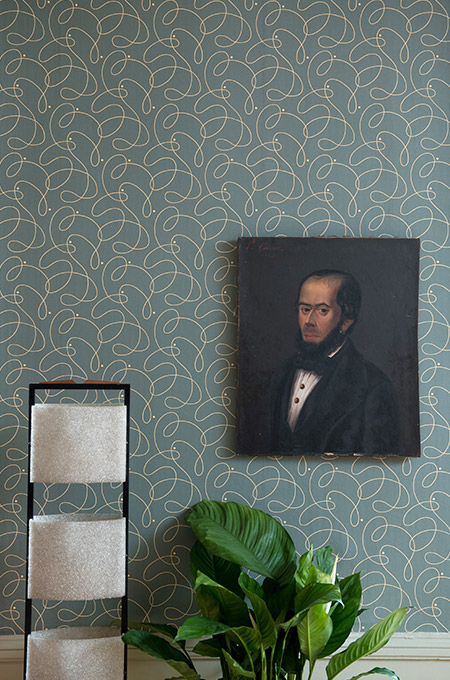
Textiles & Chinoiserie Wallpaper
Europe's interpretation of Asian decorative motifs
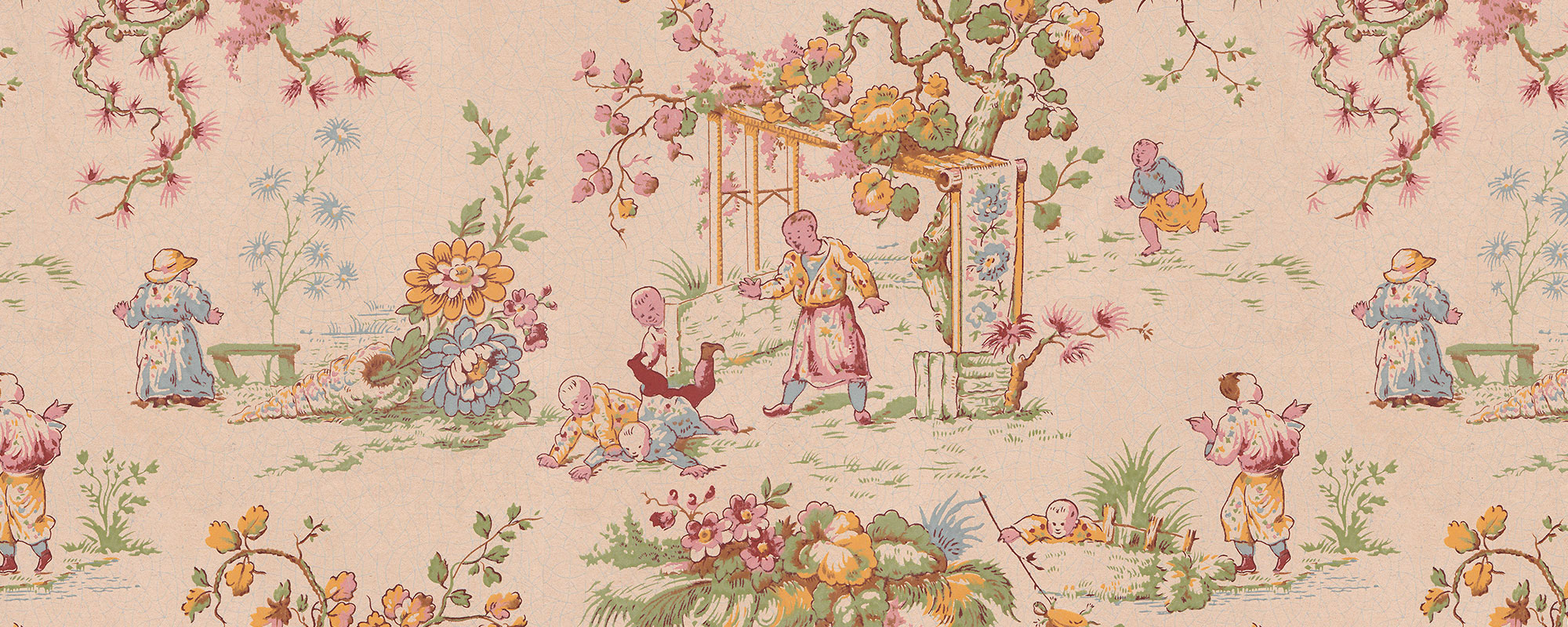
Very fashionable in the 18th century, the taste for Orient was manifest in the 17th century with the creation of the East India Company and the China Company. Commercial exchanges thus promote knowledge and then a form of appropriation of Asian culture which will be reflected specifically in decorative arts.
This trend became extremely popular at the courts of Louis XIV and then Louis XV, where grand Chinese-inspired festivities were held, particularly following the arrival of ambassadors from Siam. It found its continuation in the Rocaille style, which influenced decorative arts in France, and in the Rococo style throughout the rest of Europe.
Represented in painting by artists such as Boucher and Watteau, the taste for chinoiserie was also explored by Pillement, a Lyon native appointed "painter to Queen Marie Antoinette," renowned for his ornamental skills. His work was reproduced by numerous engravers, and his designs served as inspiration for various trades in the creation of wallpaper, furniture, porcelain, and more.