Textiles & Wallpaper: 1970s Patterns
Freedom, protest, modernity
After the enchanting interlude of the 1960s, the return to reality shaped the 1970s. In a turbulent economic and social context, the era remained free and modern, yet also rebellious. The 1968 protest movement rejected mass consumerism and the Vietnam War, advocating a closer connection with nature and a change in lifestyles.
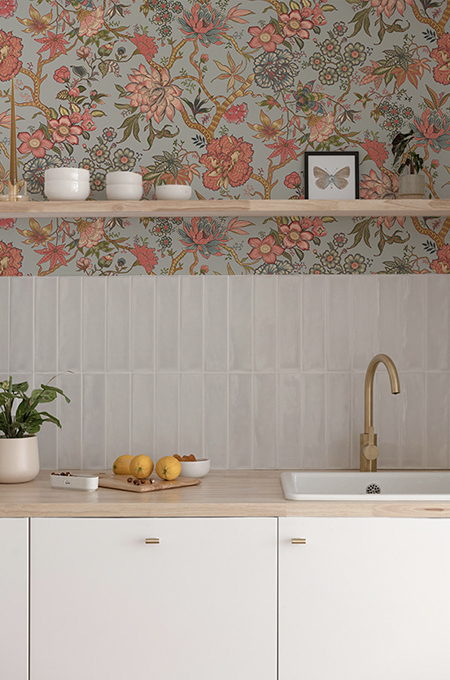
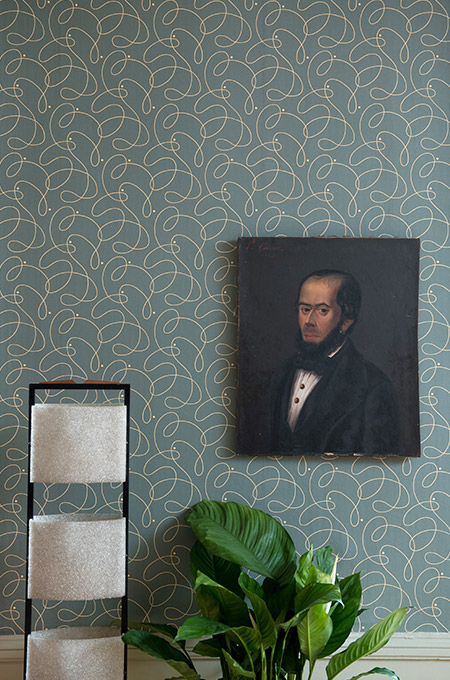
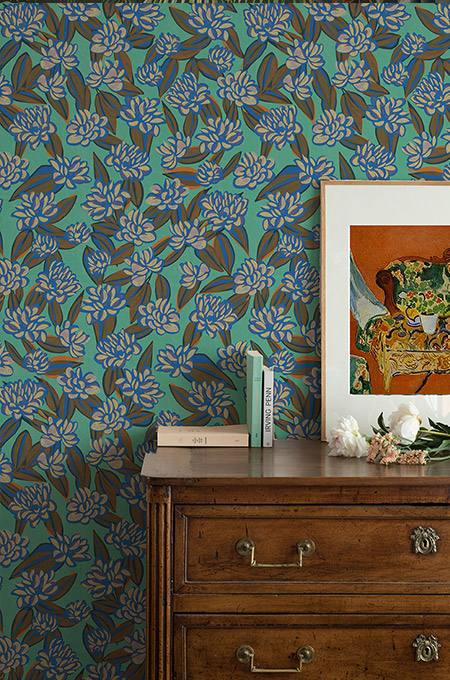
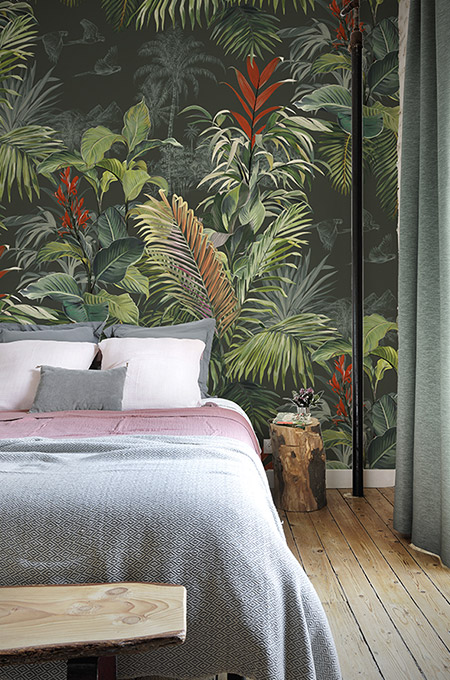
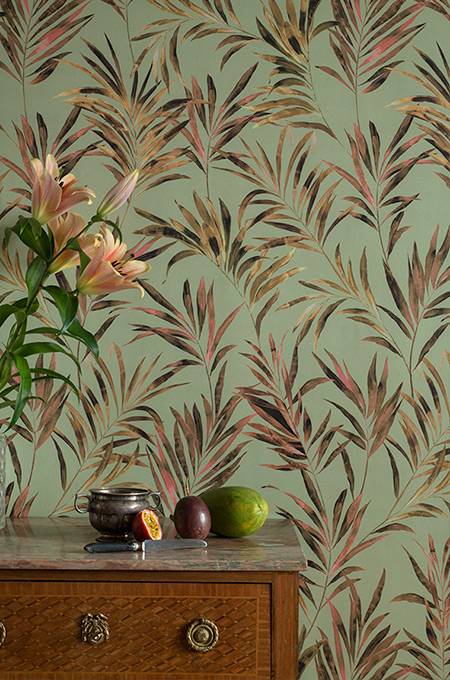
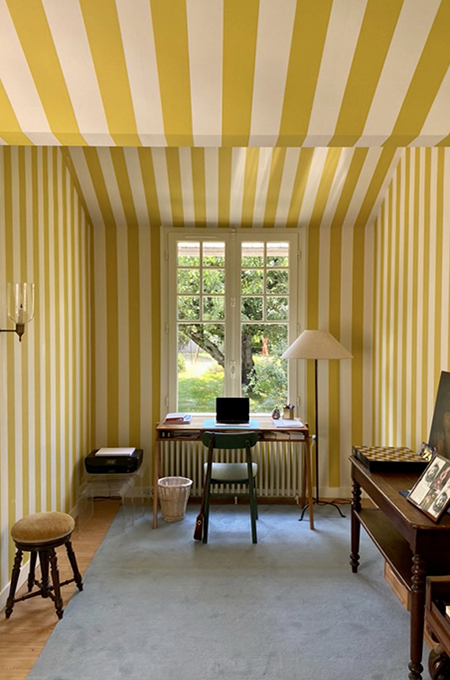
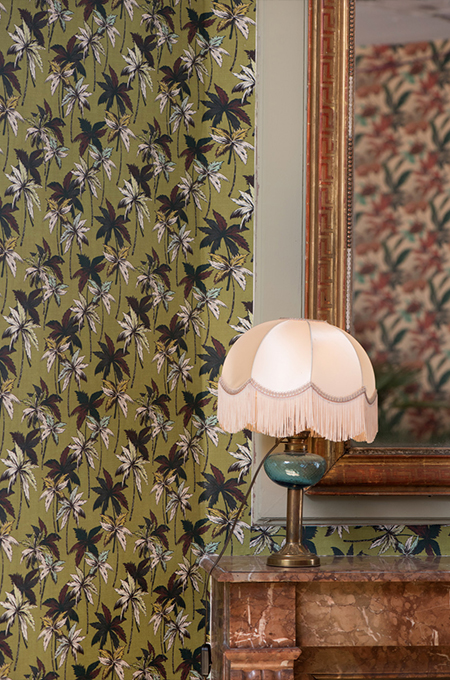
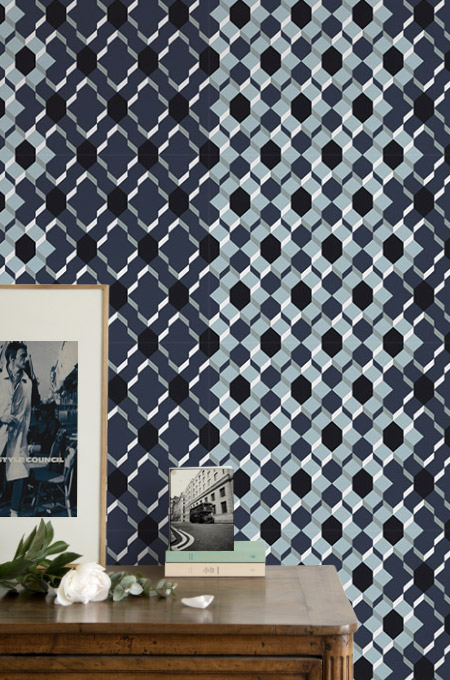
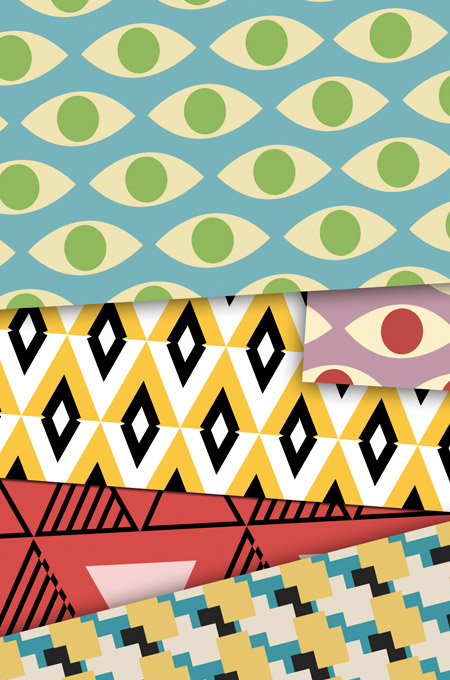
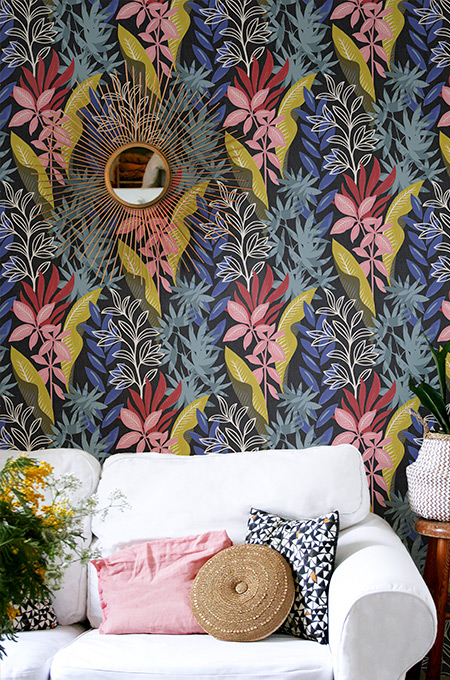
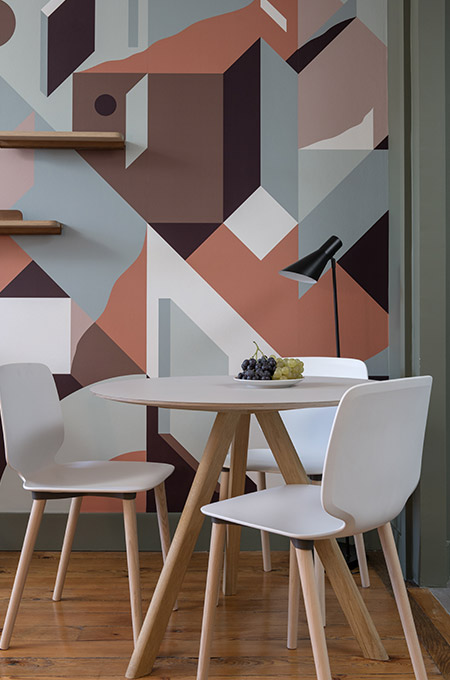
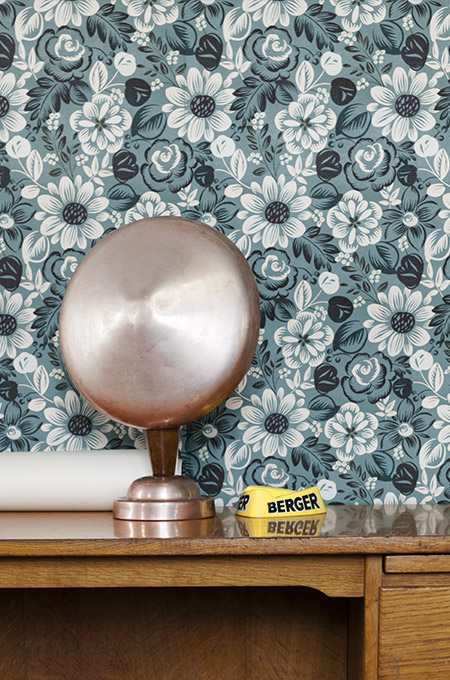
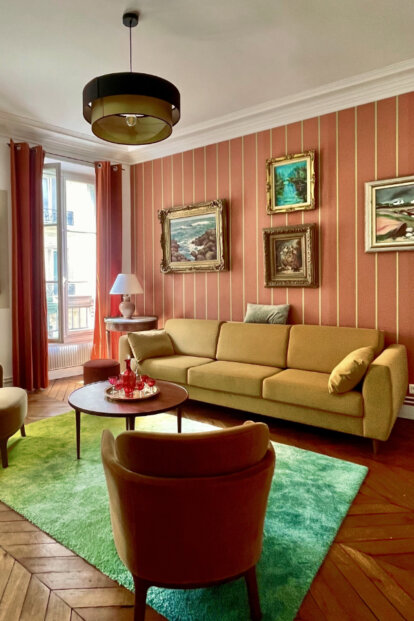
The design remains steeped in the late 1960s: bright, cheerful colors like orange, yellow, and gold are still present, as well as more natural, earthy tones, numerous geometric shapes, and distortions. These patterns, covering the walls and furniture, are complemented by organic and floral forms that echo Art Nouveau.
The ever-influential space race, the founding movements of contemporary art such as Conceptual Art, Fluxus, and happenings, all impacted the decorative arts. Imbued with freedom and creativity, abolishing the boundaries between art and life, rejecting modernism, and tinged with pop creative fantasy and a return to sobriety linked to the oil crisis and growing ecological awareness, the design of the 1970s has recently made a strong comeback.
In our workshops, the open-mindedness of that era, its audacity and its protean character are all sources of inspiration.





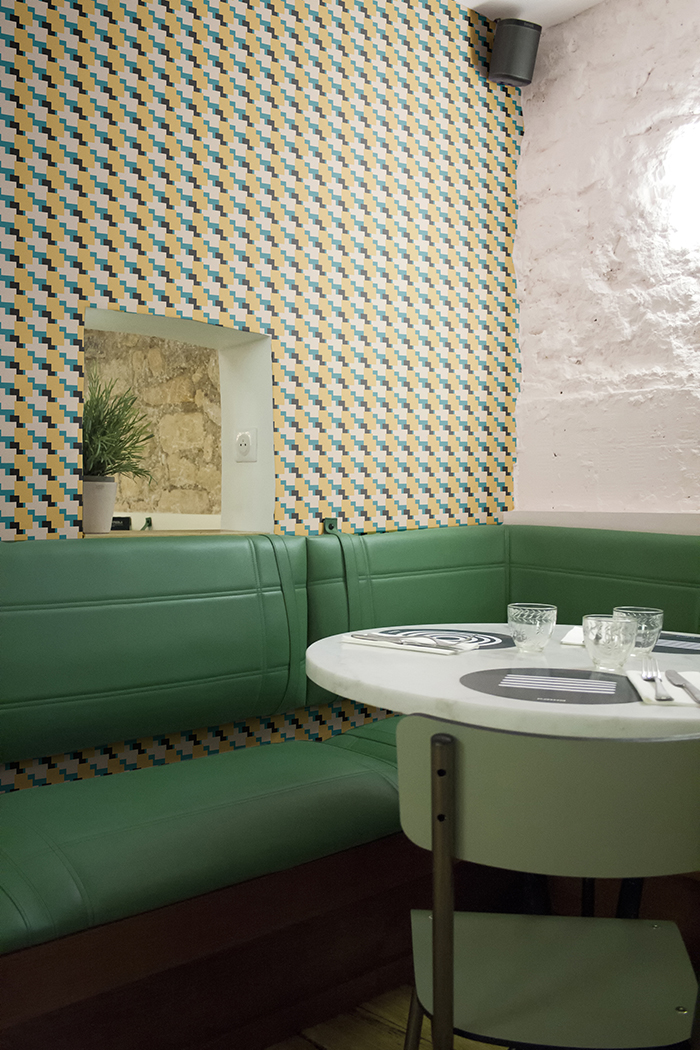

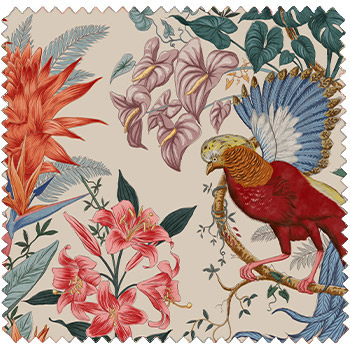
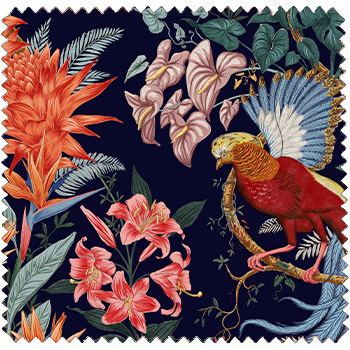


The graphic richness of the 70s in your interior
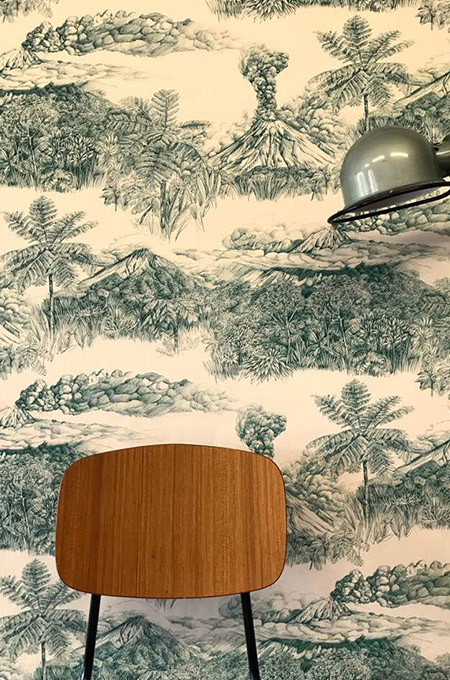
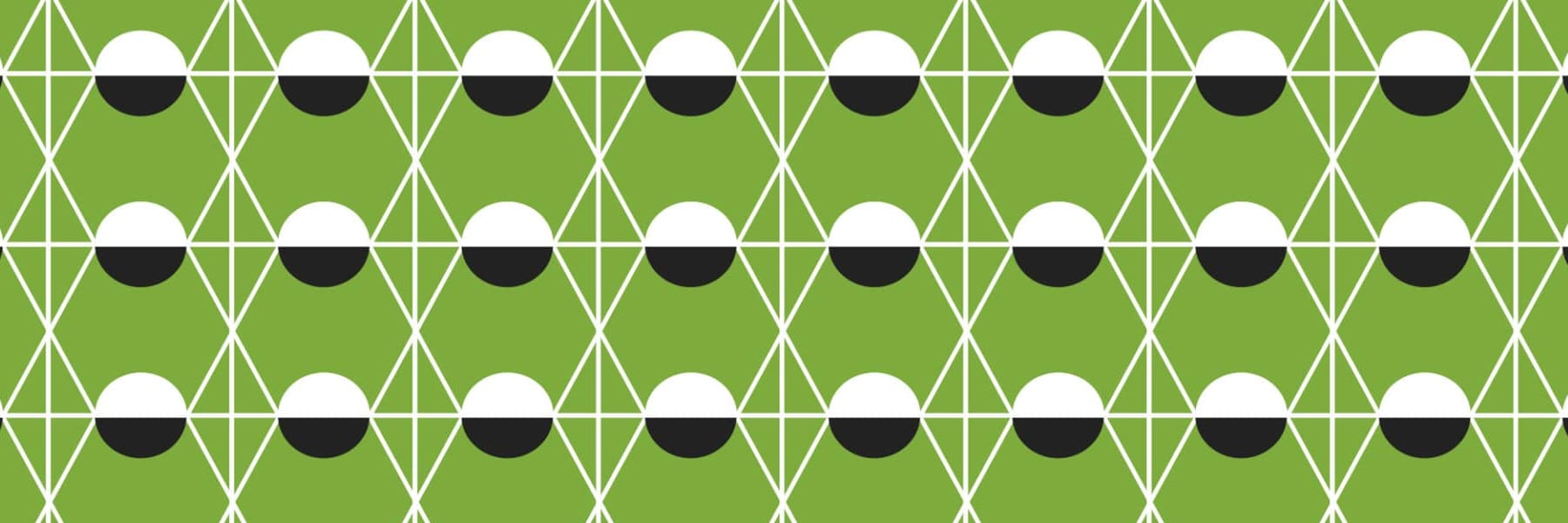
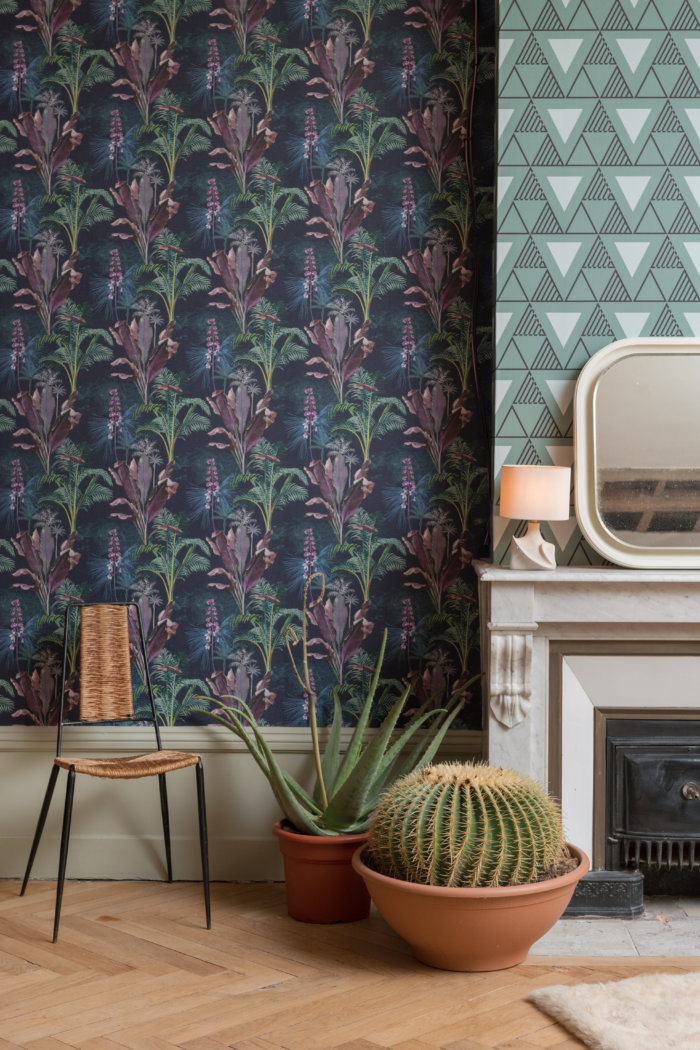
The 1970s were marked by a wealth of graphic design, primarily from the decorative arts (fashion design, industrial design, graphic design, etc.). During this period, wallpaper, in particular, became a playground for designers, and it was ubiquitous. Its style is characterized by geometric patternsand a play of colors that today define the charm of vintage.